SaaS Platform · 2026
Mobile Service Sync
The CRM for crews whose shop is a truck
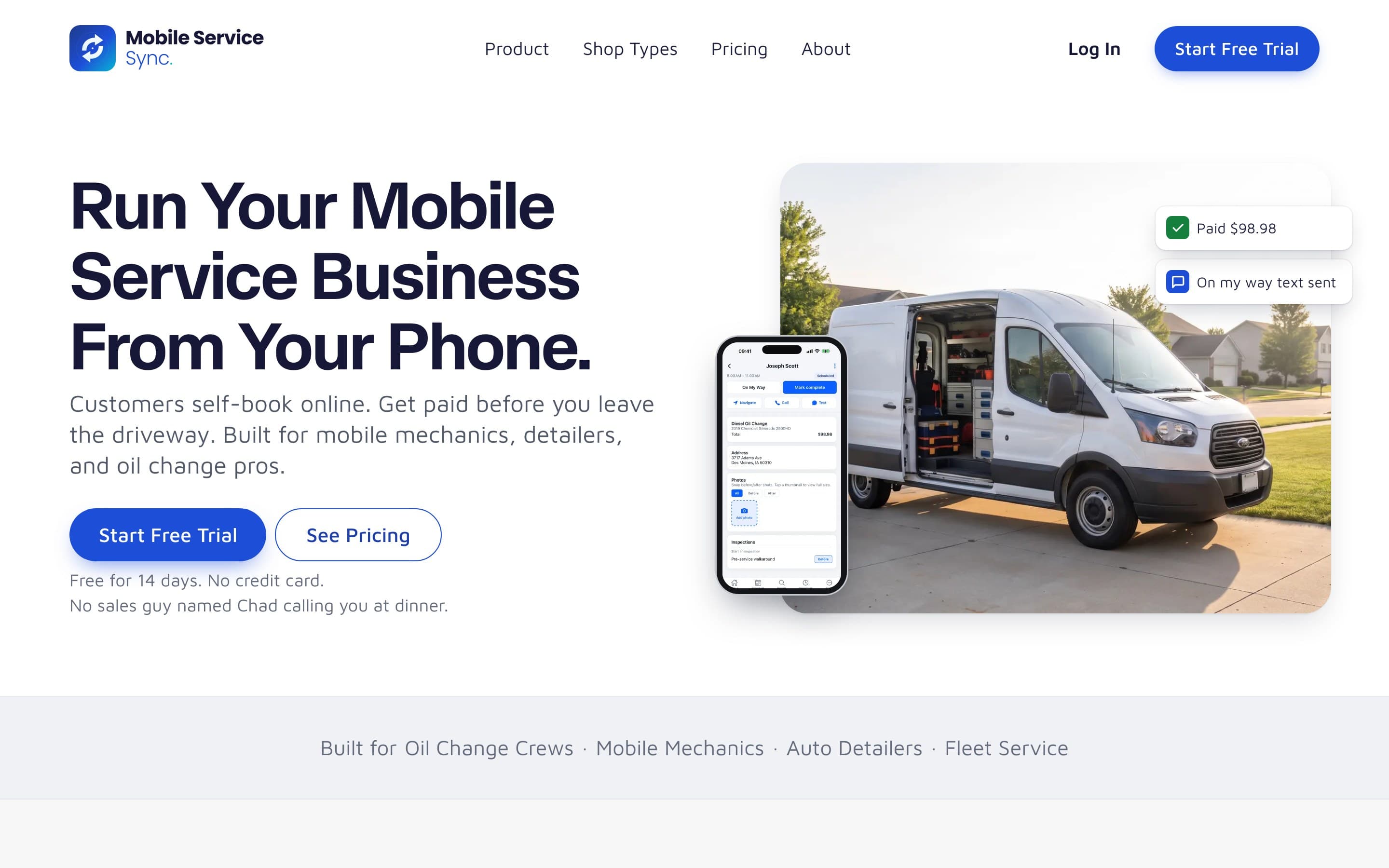
Booking, dispatch, routing, texting and payment for mobile mechanics, detailers and oil change crews, with an office on the web and a field app on iPhone and Android. Shop software is built around bays and a front counter. This is built around the route: the customer books an open slot online, the day is laid out by technician on actual drive times, and the job is paid for in the driveway.
- Routes a technician's day, or the whole crew's
- One tapRoutes a technician's day, or the whole crew's
- Office, field app, site and help centre on one schema
- 4 appsOffice, field app, site and help centre on one schema
- AI-friendly checks passed
- 9 of 9AI-friendly checks passed
The problem
Most shop software assumes a building: bays, a counter, a customer who drives in and waits. A mobile crew has none of that. Its day is a string of stops across town and its cost is drive time. Its customers want a text when the truck is coming, and payment has to happen in the driveway because there is no counter to come back to. The choice was a shop system stretched over a van or a general field-service tool that knows nothing about a vehicle.
What got built
A monorepo of four apps on one Prisma schema in Neon Postgres: the web CRM, the marketing site, the help centre, and an Expo field app that talks to the web app through its own versioned API. Every tenant query goes through requireTenant(), and a guard on the database client reports any query on a tenant table that arrives without a shop's scope. Routing runs on Mapbox drive times. Payments go through Rainforest with each shop onboarded as its own sub-merchant, invoices push to QuickBooks Online, and texting runs on Twilio with each shop's carrier registration handled inside the app. Every integration has a mock, so the whole product runs locally with no credentials. On 2 October 2026 the CRM was restyled end to end in the marketing site's world, and the dashboard was rebuilt as the day's dispatch board.
Details worth naming
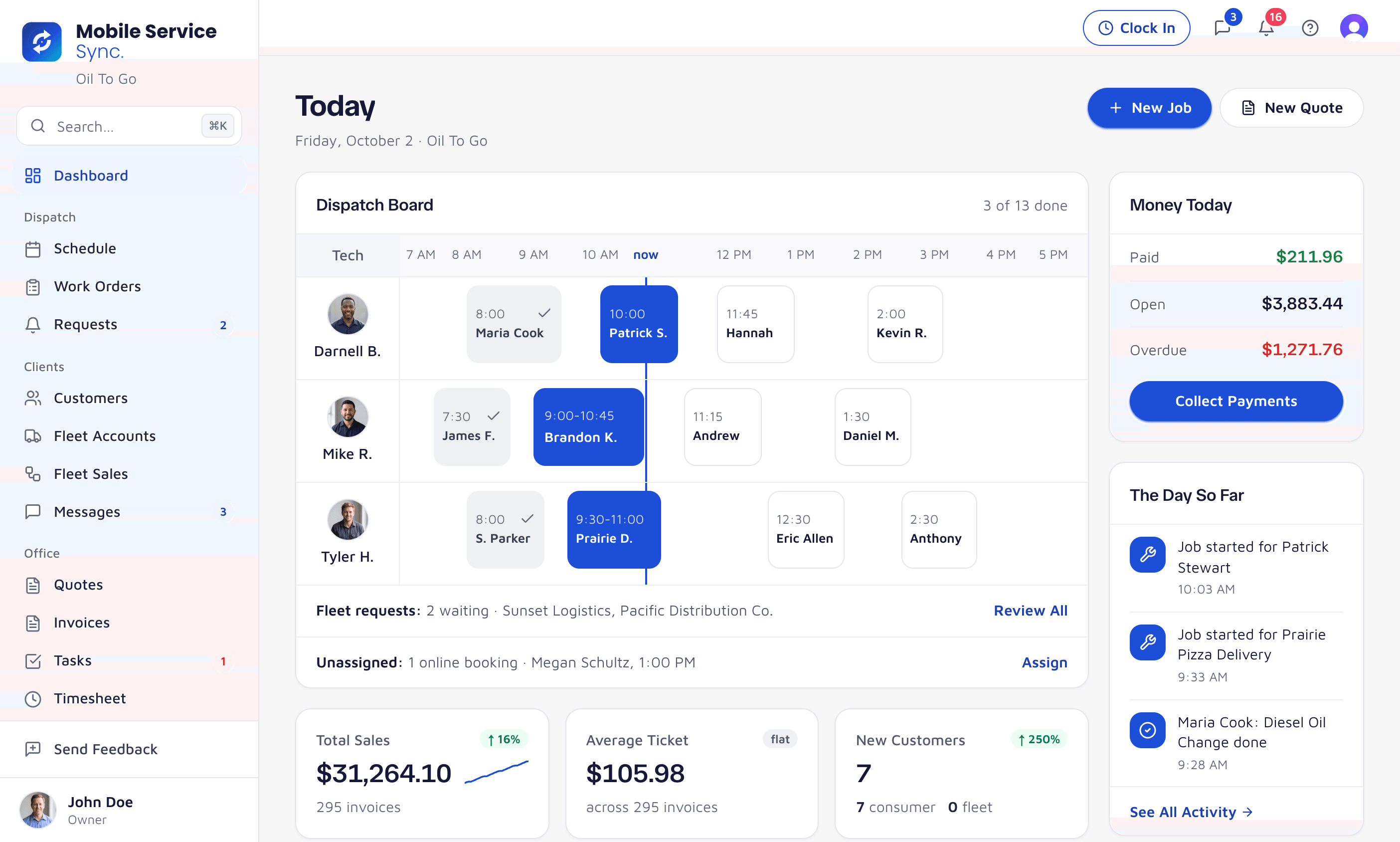
- Today: a dispatch board with each technician as a lane on the hour, a live now line, the money taken, open and overdue, and the bookings nobody has been given yet.
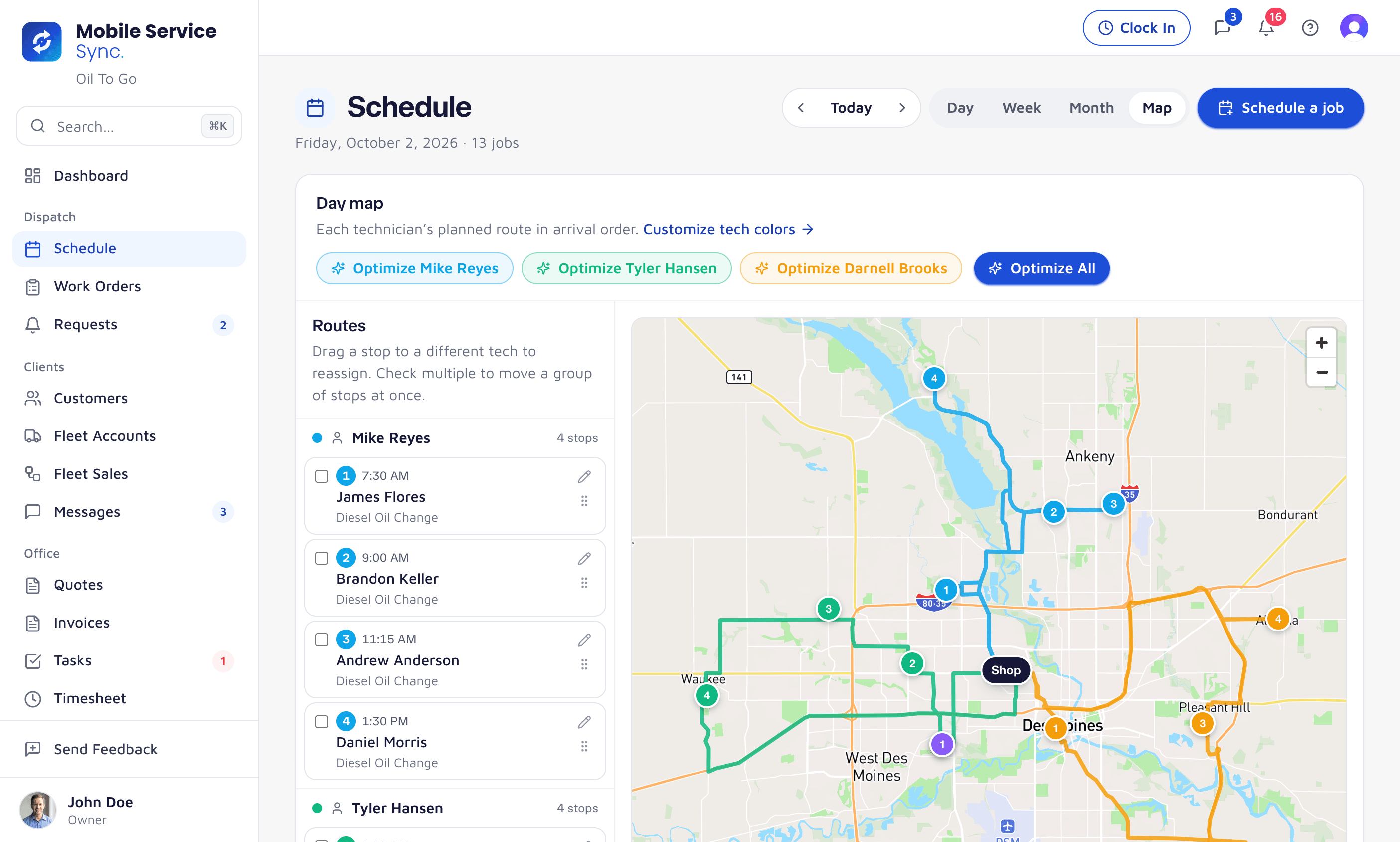
- Route optimisation on Mapbox drive times, one technician's day or the whole crew's in one tap: the jobs are split into an arc per truck, then each arc is put in order.
- A booking page for the shop's own website that decodes the customer's plate, respects its hours, service area and capacity, records the lead at step one, and assigns the job automatically.
- Payment in the driveway through Rainforest: pay links, text-to-pay, saved cards, and ACH on net terms for fleets, with every invoice pushed to QuickBooks Online.
- Fleet accounts with their own pricing and terms, and a portal where the fleet sees which vehicles are due and asks for service.
- A field app on iPhone and Android with the day's route, the on-my-way text, photos, inspections, payment and the clock, on the same login as the office.
Inside the product
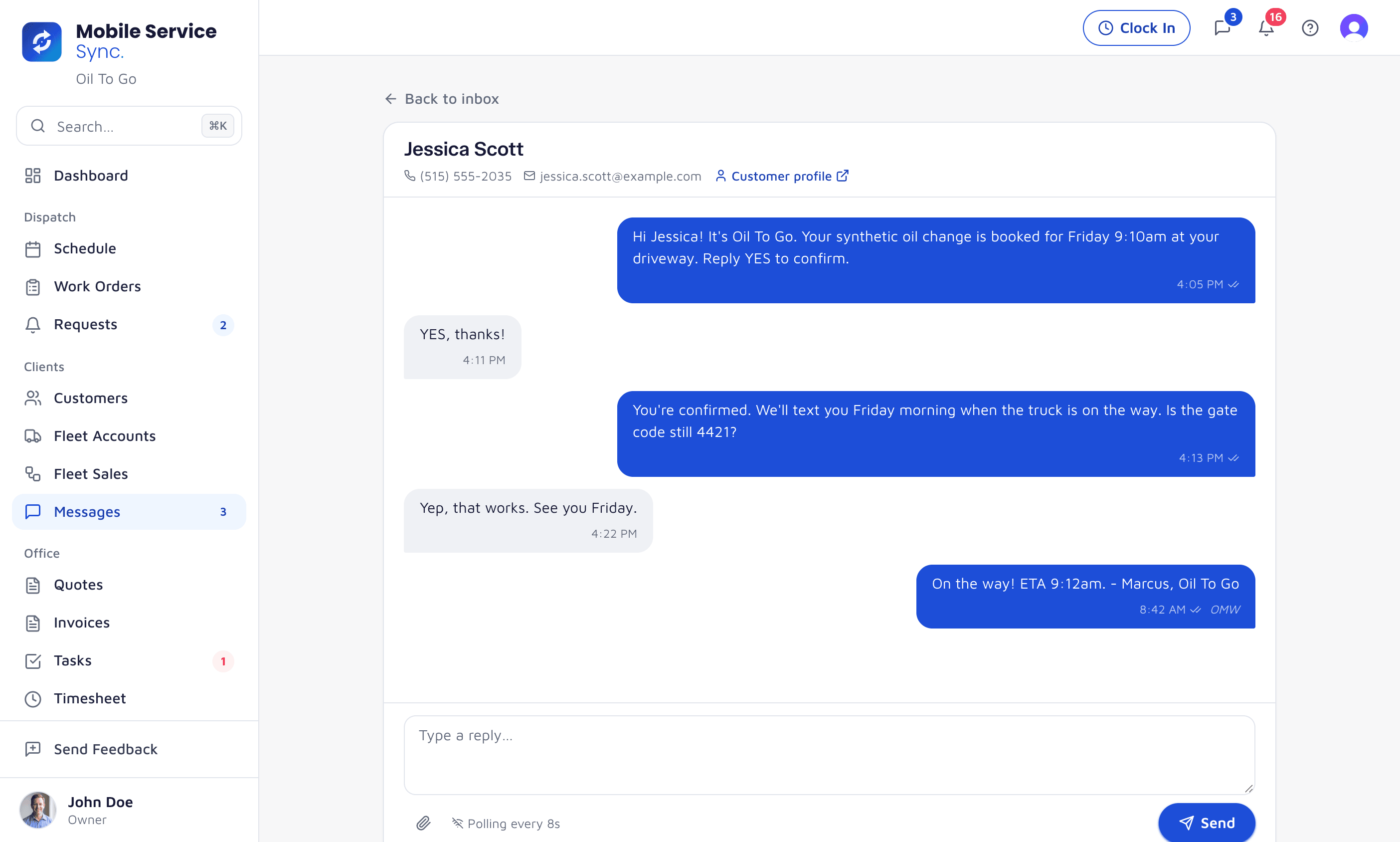
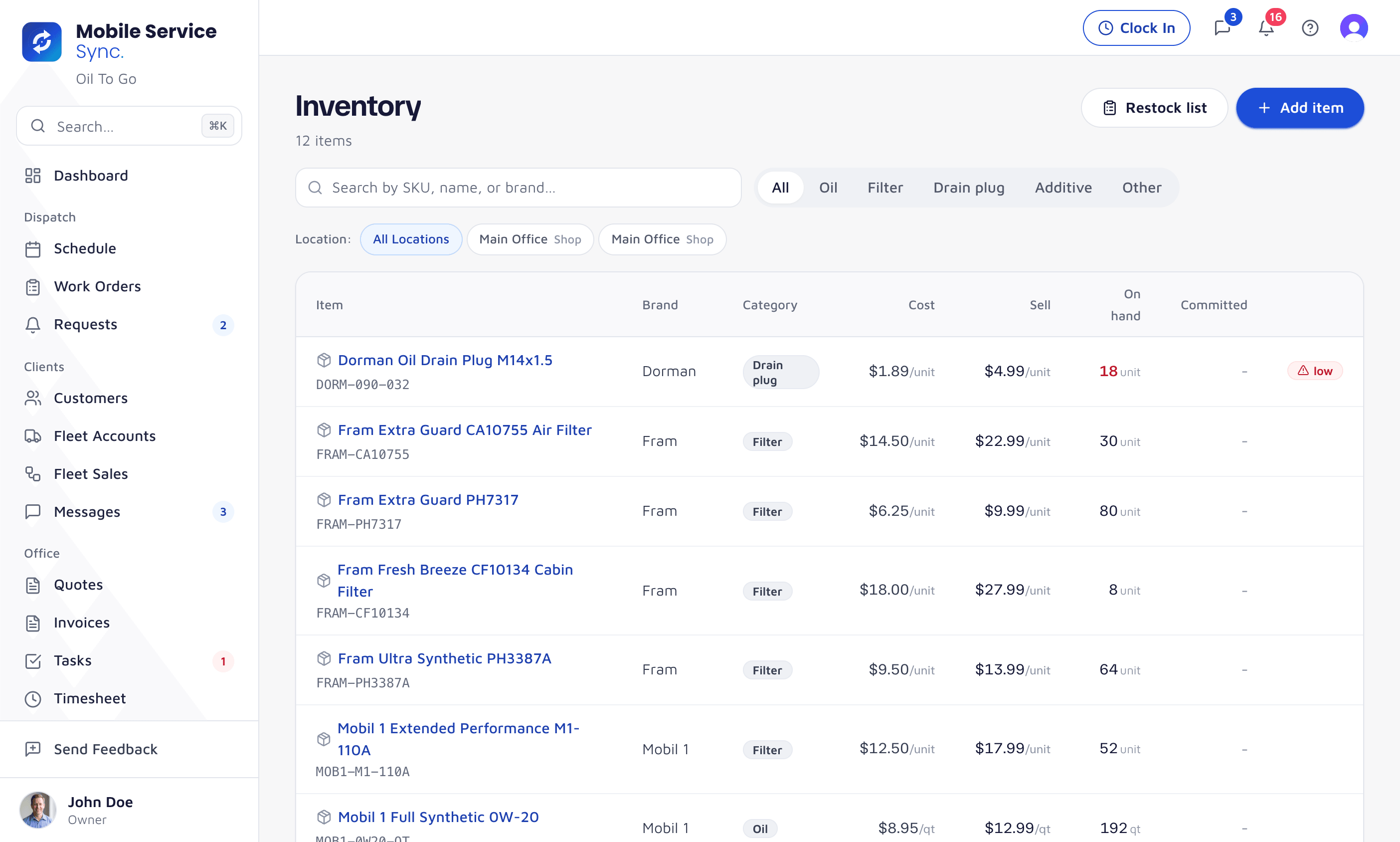
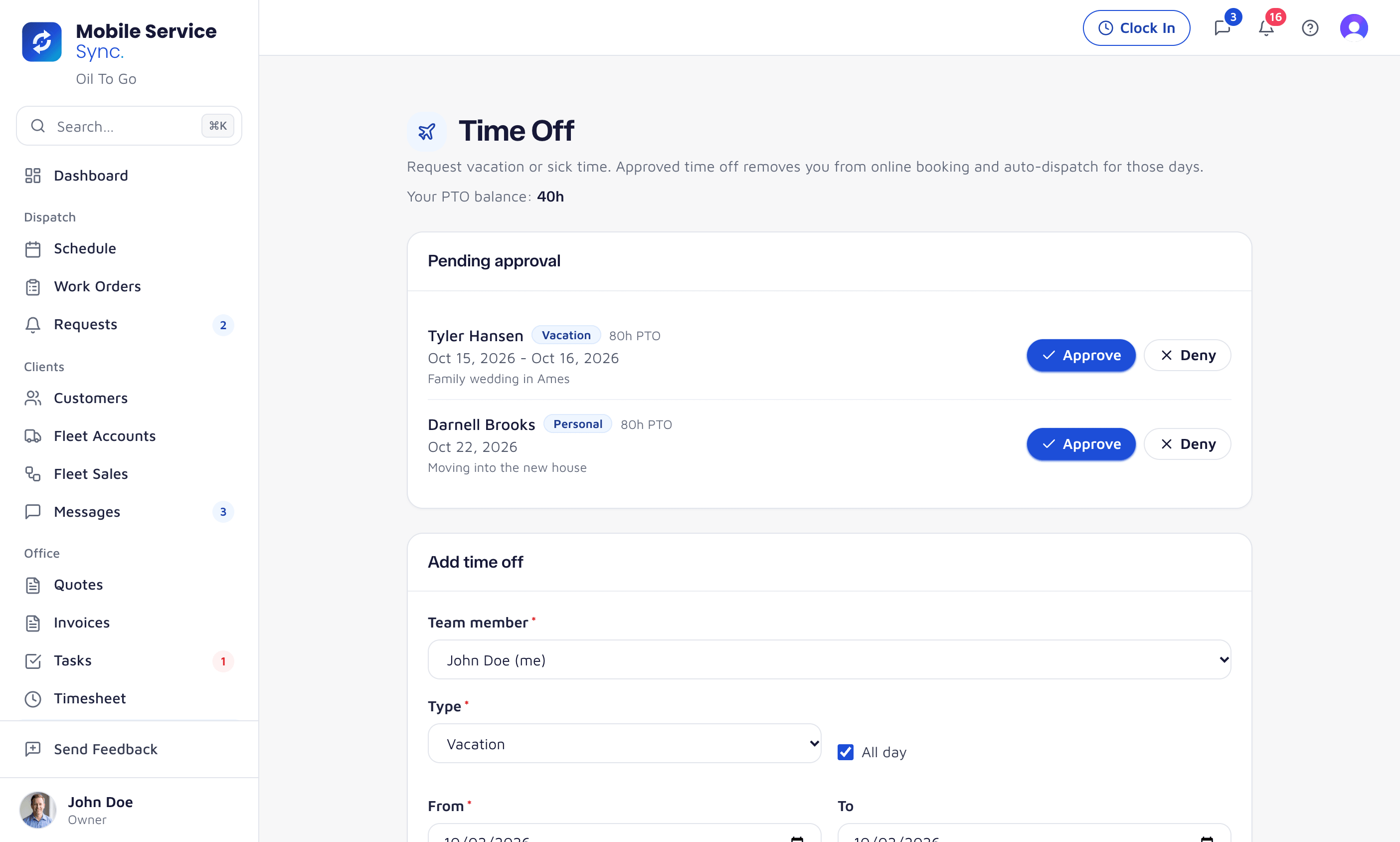
Screens from the CRM after its 2 October 2026 restyle, captured against a seeded demo shop. Every customer, technician and figure is demo data.
Next project
RWCBM
A private hall for Christian business owners, town by town

Tell us about the business.
What it does, where, and what the website has to make happen. Within a day you will have a straight answer on what it takes to build, what it costs to run, and what we would cut. If the honest answer is that you do not need a new site, that is the answer you get.
Or skip the form entirely. hello@pinelandtech.com reaches a person, not a queue.