Web App · 2026
Lucky Duck & Swan Provisions
Uni, bluefin and A5 Wagyu, priced to the door and shipped overnight
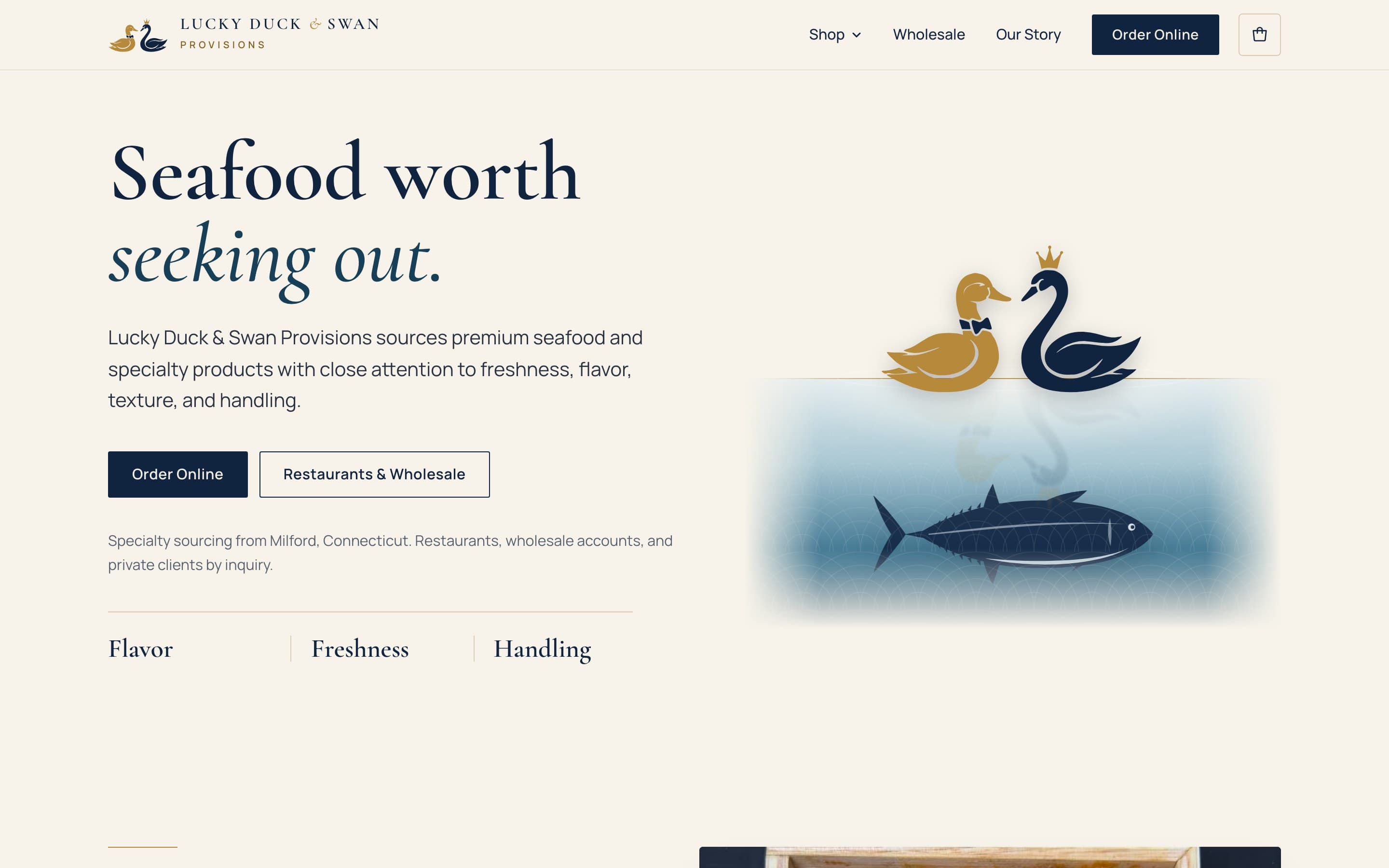
Specialty seafood and Japanese A5 Wagyu out of Milford, Connecticut, sold two ways from one catalog. A customer at home picks the day it arrives, sees every overnight service priced for their own address and their own box, and pays by card. A restaurant signs in, sees its own price, and is invoiced once the weights are confirmed. The owner buys the label, prints the packing slip and sends the tracking from one order screen.
- Mobile performance on the home page
- 97Mobile performance on the home page
- AI-friendly checks passed
- 9 of 9AI-friendly checks passed
- Overnight, priced for the customer's own address
- Every serviceOvernight, priced for the customer's own address
Measured on the live site
Read off luckyduckandswan.com, not a staging copy. Lighthouse on its default phone profile; where a run came in low, the median of three.
Lighthouse, on a phone
29 September 20269 of 9
AI-friendly checks passed
What an assistant reads before it recommends a business: robots.txt, the llms.txt and the structured data. Run the same checker on your own site.
Score my siteProduct, Offer and unit price
Structured data on every product page, with its breadcrumb, from the same records the desk edits.
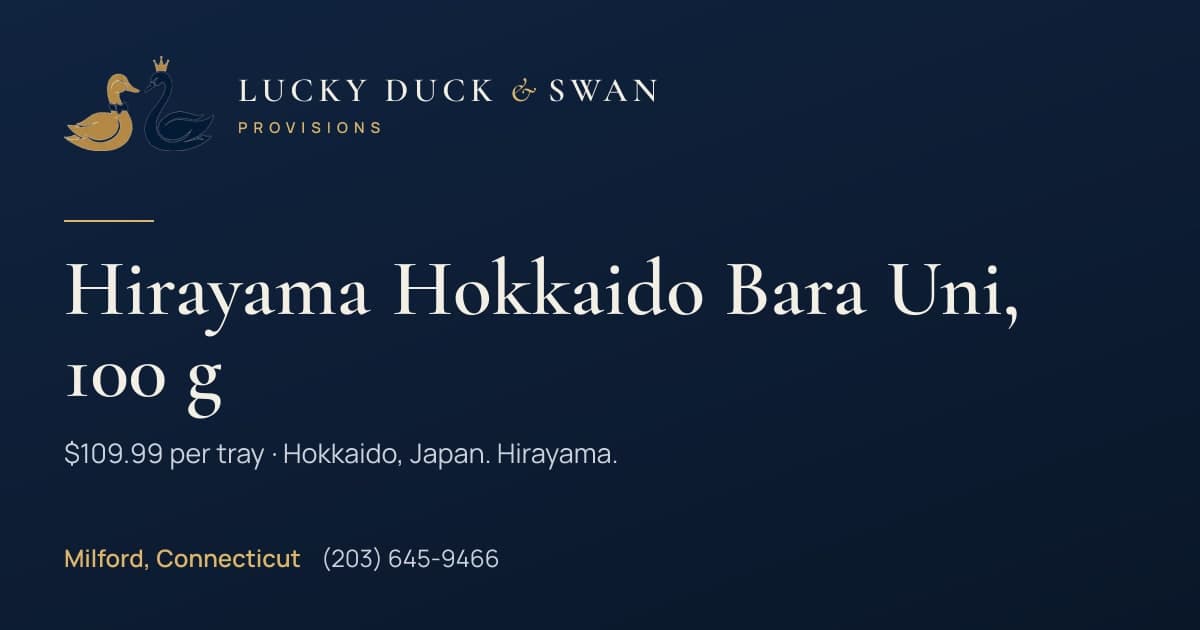
A link preview for every page
All 19 pages in the sitemap draw their own preview, so a link texted to a chef arrives as the product and its price, not a bare address.
15 assistants admitted by name
robots.txt names each crawler, and points at an llms.txt generated from the live catalog.
The problem
Fresh fish shipped overnight is priced by the box it travels in, the address it goes to and the day it has to land, and the card is charged before anything is packed. A flat shipping figure loses money on the parcel going far and overcharges the one going near. The old site was a brochure and a request form, so every sale ended in a phone call to work out the carriage, and a spreadsheet after it.
What got built
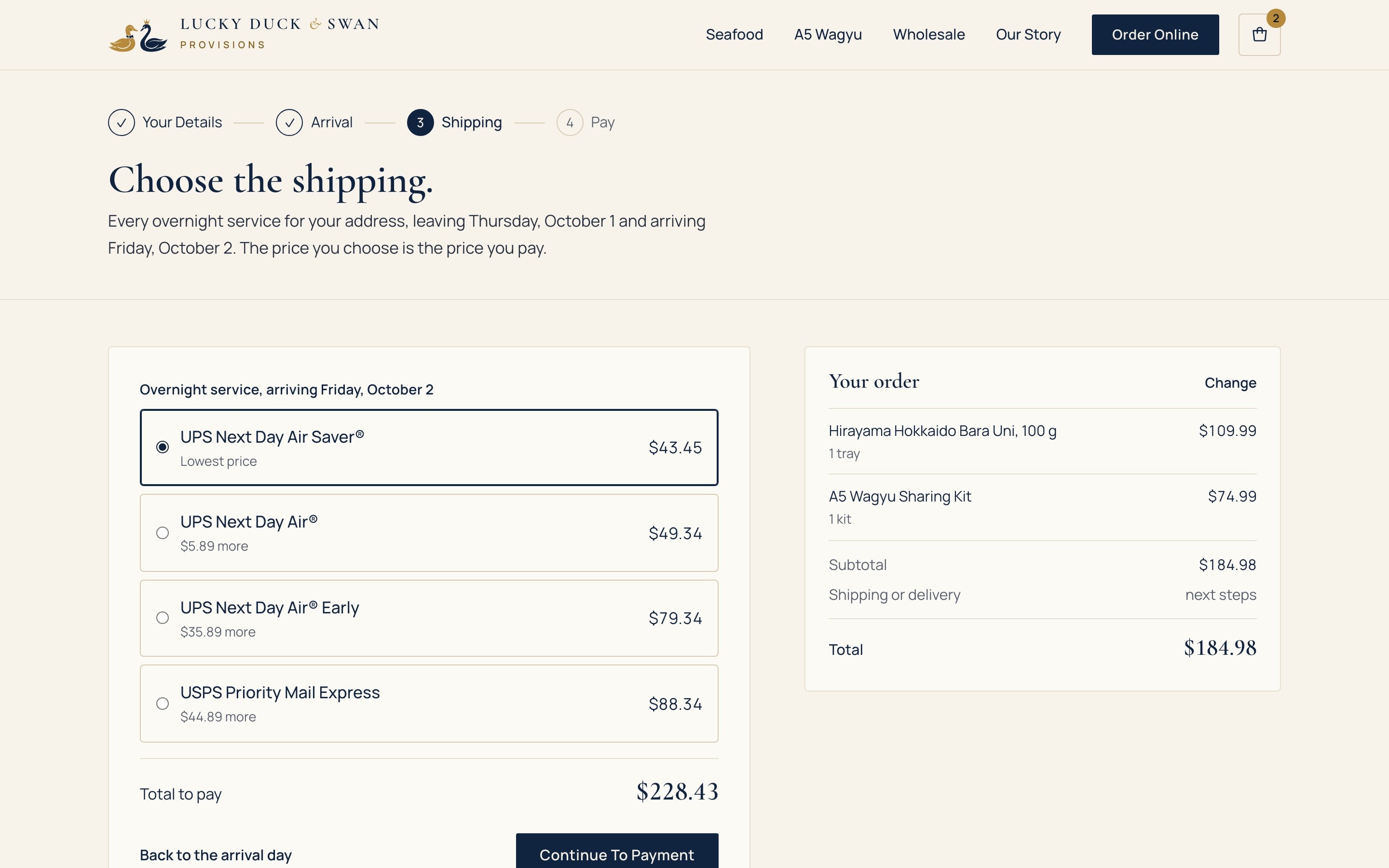
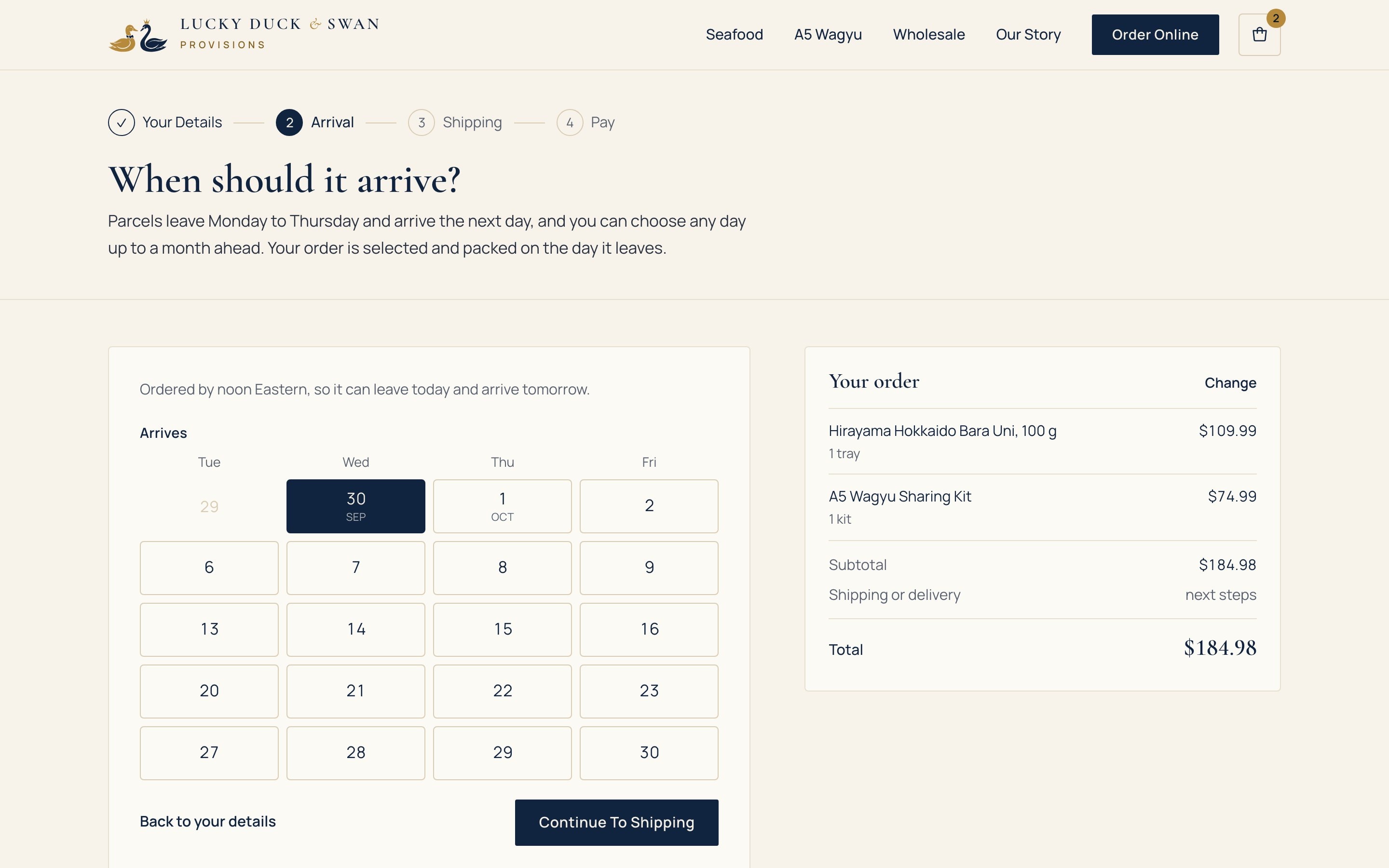
The checkout is four short pages: details, arrival day, shipping, card. The shipping step asks Shippo to rate the basket as the parcel it will actually be (the owner's own box, its empty weight, the weight of each item, plus his packing cost) for the chosen day, and lists every overnight service the carriers offer for it. Each price it shows is signed over the day, the service, the address and the parcel, so the figure the customer picked is the figure charged, never a second quote. On the order screen, one button buys the label for the service the customer paid for, and the tracking goes out by email when it ships. Around that, the trade route runs on the same product records with its own basket, and a build check fails if a wholesale price reaches any public page, link preview, structured data or the llms.txt.
Details worth naming
- Overnight shipping priced live at checkout for the customer's address, the arrival day they chose, and the box the order will really travel in.
- Every price shown is signed, so what the customer picked is what the card is charged, even when a carrier's second answer would differ.
- One button buys the label the customer already paid for, a packing slip prints without prices, and the tracking number is emailed on dispatch.
- The carriers' quirks handled in code: USPS will not rate more than six days out and UPS throttles, so both are worked around rather than dropping a service.
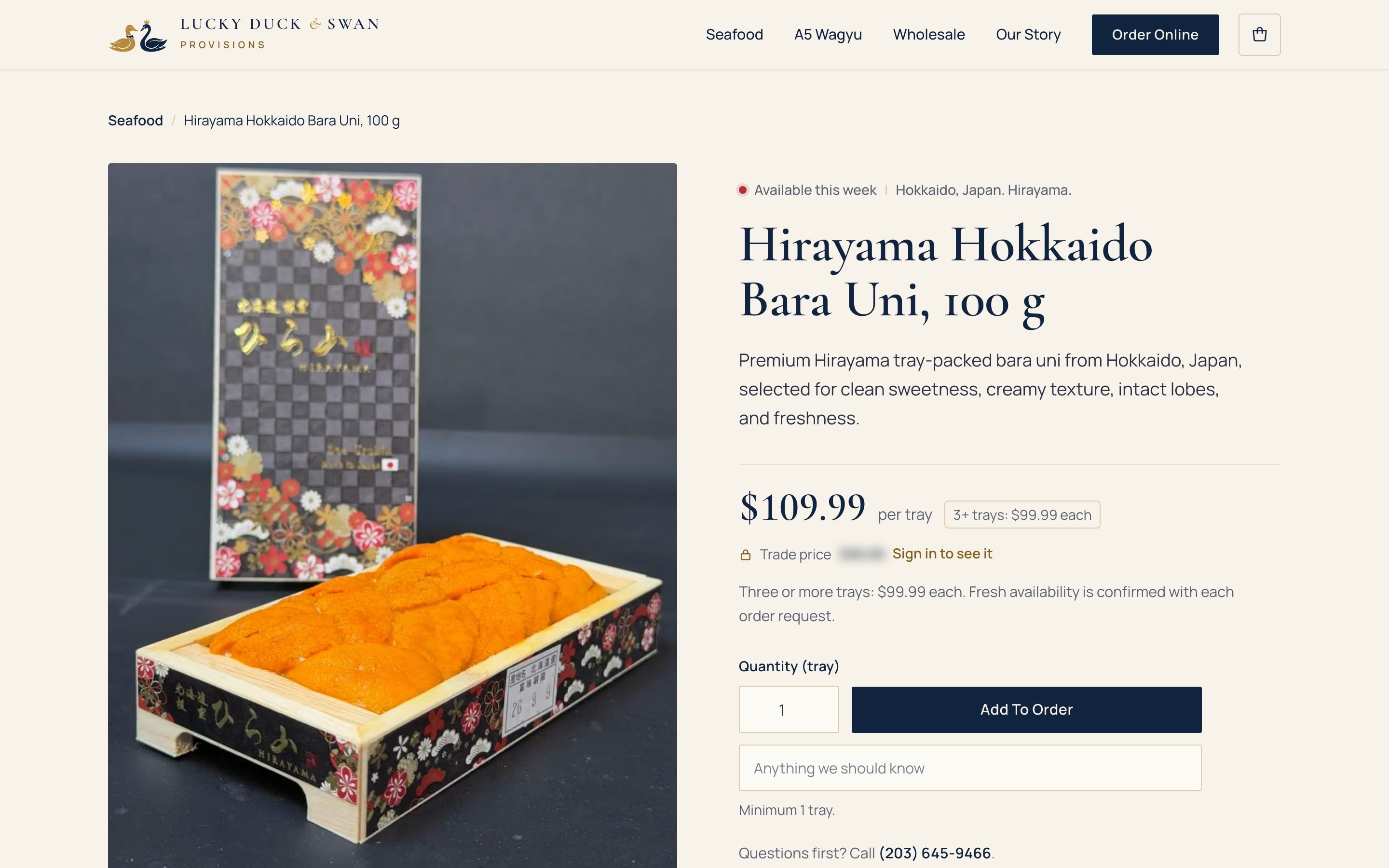
- A page, a link preview and structured data for every product, drawn from the same records the order desk edits, so a link texted to a chef arrives as the uni and its price rather than a logo.
- Trade accounts sign in by an emailed code and see their own prices; catch-weight orders are confirmed on the desk and invoiced through Stripe from the confirmed lines.
Inside the product
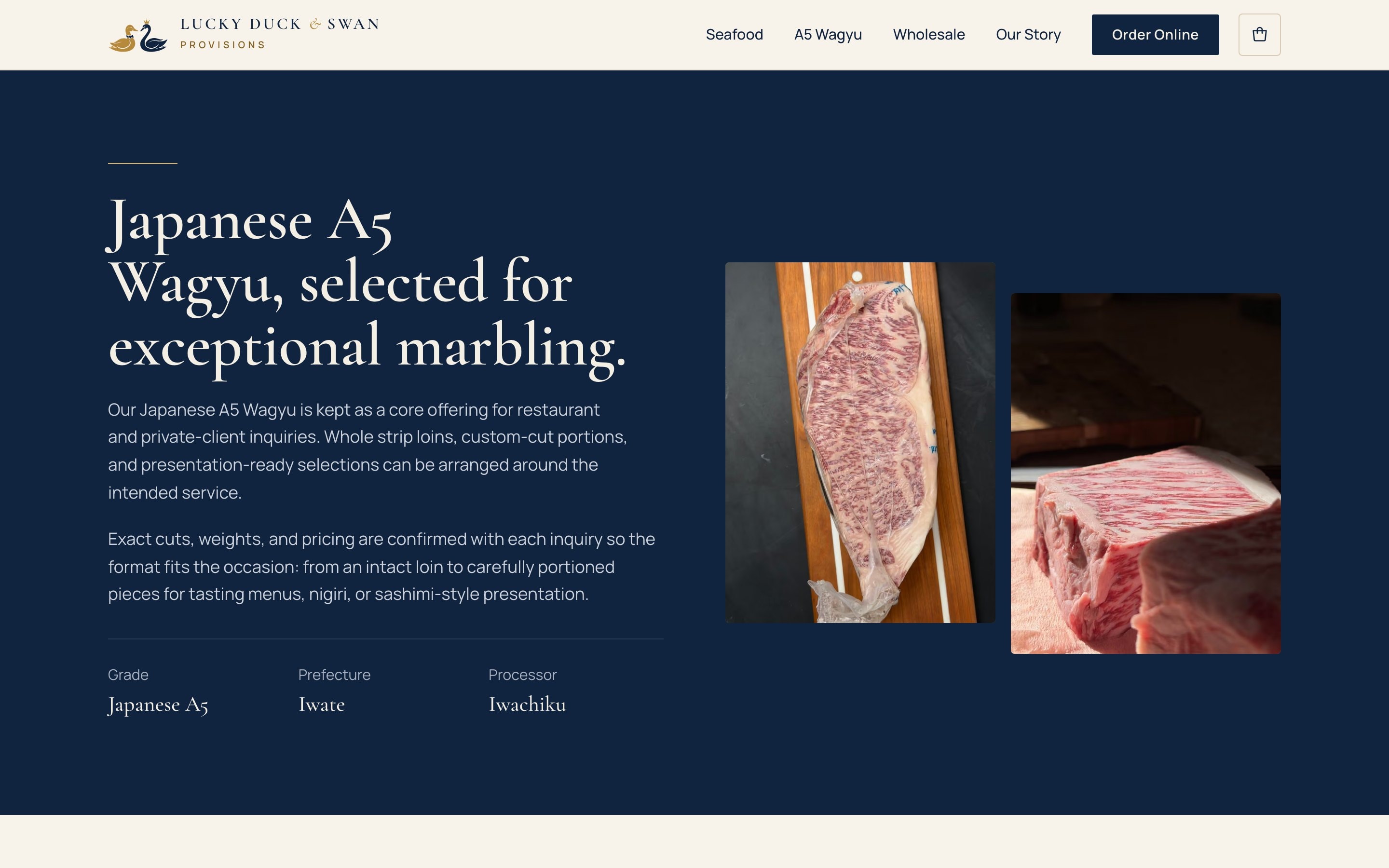
Captured from the live site, including a real checkout run to the shipping step with a sample address.
Sous chef
Hirayama Hokkaido Bara Uni, 100 g | Lucky Duck & Swan
luckyduckandswan.com
Delivered
Next project
Heritage American Woodworks
Heirloom hardwood furniture, commissioned from anywhere in the country
Tell us about the business.
What it does, where, and what the website has to make happen. Within a day you will have a straight answer on what it takes to build, what it costs to run, and what we would cut. If the honest answer is that you do not need a new site, that is the answer you get.
Or skip the form entirely. hello@pinelandtech.com reaches a person, not a queue.